NORTH OF KHURDA — The transmission tower is forty metres of galvanised steel and, depending on who you ask, either a relic or the future. India adds more electricity demand every year than most countries consume in total, and every watt of it has to cross hardware like this: lines, substations, transformers — the least fashionable infrastructure in the economy, and suddenly its most contested.
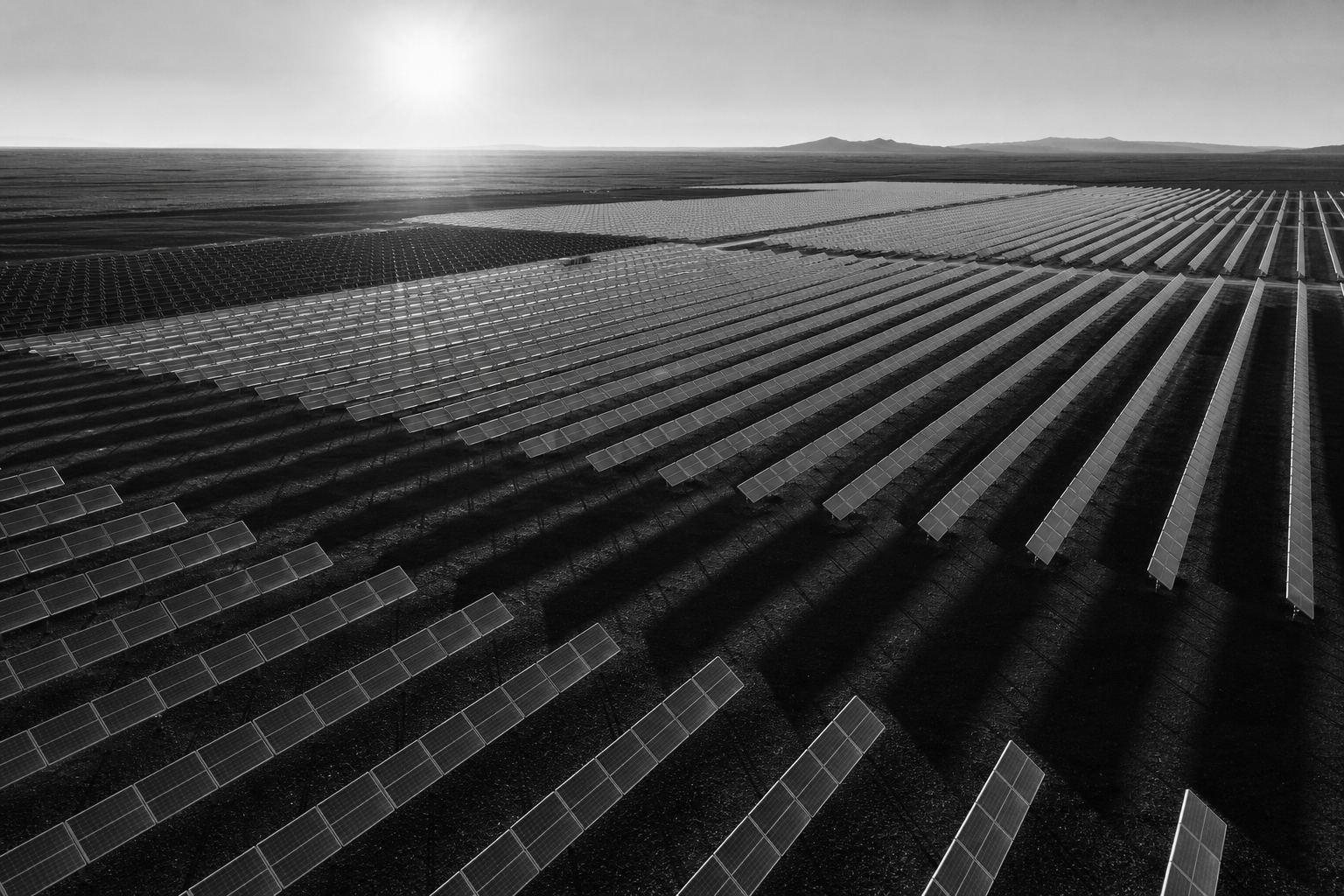
The numbers are not subtle. Solar and wind are now the cheapest electrons in the country, but they arrive on the weather’s schedule, not the grid’s. Bridging that gap — storage, forecasting, flexible demand, thousands of kilometres of new transmission — is an engineering programme on a scale India has attempted only twice before: the railways and the Green Revolution.
The coalition nobody predicted
What is new this time is who is doing the work. Alongside the state utilities — slow, capital-heavy, and recently pragmatic — a layer of private builders has appeared: forecasting startups selling hour-ahead accuracy to wind farms, storage integrators assembling containerised batteries in Bhiwandi and Sriperumbudur, and grid-software teams in Bengaluru writing the dispatch logic that decides, every fifteen minutes, whose electron goes where.
“The app economy was the rehearsal. The grid is the performance.”
“For twenty years the best Indian engineers went into software that moved advertising budgets,” one grid-software founder told us. “Now some of them are moving electrons. The app economy was the rehearsal. The grid is the performance.”
The unglamorous bottleneck
The constraint is rarely technology. It is land acquisition for transmission corridors, payment discipline from distribution companies, and a regulatory calendar written for a slower era. Every expert we interviewed returned to the same point: India’s energy transition will be won or lost in state electricity board meeting rooms, not in demo days.
That is precisely why the story matters. If the coalition holds — utilities, founders, financiers, and the engineers now choosing substations over startups — the grid becomes the platform the next thirty years of Indian growth are built on. If it fractures, the bottlenecks will compound as fast as the demand. Either way, this is where the story is.